

Recently, I cleared the Claude Certified Architect – Professional certification. The result mattered, but the most interesting part was the learning system I built to prepare for it.
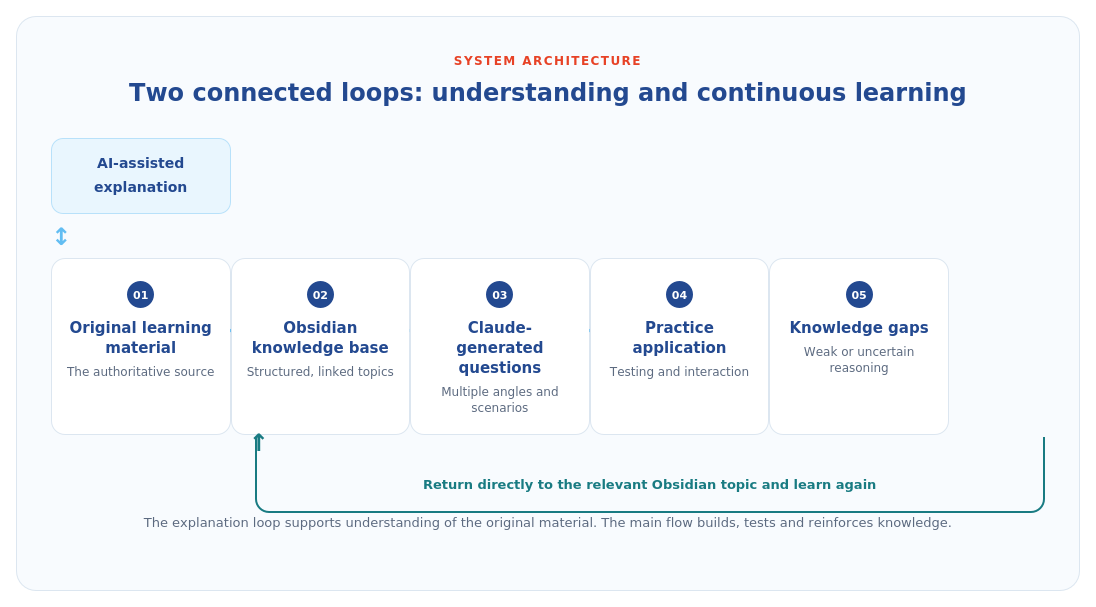
I am naturally more of a listener than a reader, so I combined ChatGPT, Read Aloud, Obsidian, Claude and Claude Code with a custom practice application. ChatGPT helped me unpack difficult concepts. Obsidian became the structured knowledge base. Claude and Claude Code helped connect that knowledge and challenge it from multiple angles. The application turned the whole process into a repeatable learning loop. I built the vault gradually during my second pass through the learning material, adding each original topic as I studied it rather than trying to create the entire knowledge base upfront.
The actual examination later put exactly that approach to the test.
I changed how I consumed the material
Reading large amounts of technical content continuously has never been the most effective way for me to learn. I understand ideas much better when I listen, so every topic went through two passes.
In the first pass, I used ChatGPT to explain each topic simply and in depth, then listened using Read Aloud. When something was unclear, I kept asking: Why does this architectural choice make sense? How are these two approaches different? What changes under another constraint?
Once I understood the concept, I returned to the original learning material. I listened to it while following along on screen, now with enough context to notice the detail. AI-assisted explanation was a support loop around the source material, not a replacement for it.
The second pass built my Obsidian knowledge base
As I worked through the original material again, I built an Obsidian vault. Each course or major section had a folder, with individual notes corresponding to the source topics. By the end, the vault had become a structured representation of the curriculum rather than a loose collection of notes.
I then used Claude and Claude Code to establish relationships between topics. That is where the knowledge base became much more useful: concepts that had appeared separately in the training material began forming a connected graph.
The exact folder structure is not important. The principle is: build the vault around the material you are learning, and preserve a clear path back to the source topic. If you are new to this setup, searching YouTube for "Claude Code + Obsidian" will give you several practical examples of how to structure and connect an Obsidian vault using Claude Code.
Claude challenged my understanding
Once the knowledge base was established, I used Claude to generate objective questions grounded in the topics in my vault. The application itself does not generate the questions; Claude does. The application stores, presents and connects them back to the relevant knowledge.
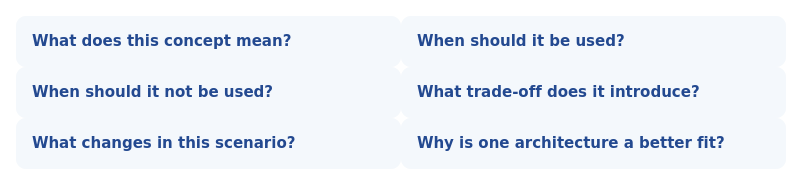
I was not trying to reproduce the certification exam. I wanted broad coverage and different ways of testing the same principle:
Every question led back to the knowledge
The generated questions were stored in a PostgreSQL database with the information needed to connect each one to the relevant topic in Obsidian. The application presented the questions and tracked my interaction.
If I answered incorrectly, or answered correctly but was unsure why, I could go directly back to the appropriate note and study it again. The mock test was therefore not only an assessment; it was part of the learning process.

The actual examination was different
My preparation had focused on knowledge, not actual examination questions or an imitation of their exact pattern. I felt that difference immediately.
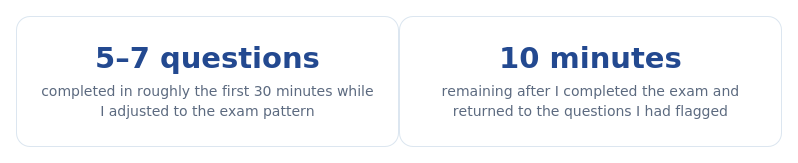
During that slow start, I was learning how the examination presented its scenarios. Then something clicked. I stopped looking for questions I recognised and began mapping each situation back to first principles:
What is the real problem? Which principle applies? What is the trade-off? Why is one option more appropriate than another?
From that point, I moved through the remaining questions comfortably. For me, this was the clearest validation of the method: it had not trained me to recognise expected questions. It had helped me reason through unfamiliar ones.
The certification was the target; deeper knowledge was the objective
Sample questions can help us understand an assessment and reveal weak areas. But for an architecture certification, I wanted to go further: to understand why something works, where it works, what its limitations are and what changes when the scenario changes.
That is why broad knowledge coverage mattered more to me than question familiarity.
I am sharing the learning application
The application is built using Docker Compose, React, Golang, PostgreSQL and Obsidian. It retrieves Claude-generated questions from PostgreSQL, presents them to the learner, tracks the interaction and connects each question back to the appropriate topic in the Obsidian vault.
The repository also includes the CLAUDE.md structure used with Claude Code, making it easier to understand how the application and its components are organised.
The repository contains the application, code and learning framework. It does not include Anthropic training material or actual certification examination questions.
View the GitHub repository →Anyone applying this method should create their own Obsidian vault from learning material they legitimately have access to. Once that vault is structured, Claude can generate questions and associate them with the relevant topics; the application becomes the interface for practice, gap discovery and relearning.
The pattern extends beyond one certification
The same architecture can support enterprise learning, technical enablement and knowledge-intensive workflows. Organisations can structure proprietary knowledge, generate grounded assessments, identify individual knowledge gaps and guide users back to the relevant source material. The certification was one use case, but the underlying pattern has much wider potential.
Learn deeply → structure the knowledge → connect it → generate questions → test yourself → return to the source
My biggest takeaway
I used AI extensively while preparing for an AI certification, but not to reduce the amount of learning. I used it to increase the depth of learning.
ChatGPT helped me understand the material in the way I learn best. Read Aloud helped me listen and absorb it. Obsidian became the structured knowledge base. Claude challenged that knowledge from multiple angles. The application kept me moving between testing and learning.
Do not prepare only for the questions you expect to see. Prepare until you understand the subject well enough to handle the questions you did not expect.
For me, earning the Claude Certified Architect – Professional certification was the result. The deeper understanding I built while preparing for it was the real value.